


 NEW DELHI, OCT 16: Delhi Police on Friday detained Cockroach Janta Party (CJP) founder Abhijeet Dipke and All India Students’ Association (AISA) president Neha Bora as they headed to join the proposed ‘Lehra Do Tiranga’ protests in the national capital, while hundreds of demonstrators gathered at Connaught Place and Mandi House amid extensive security deployment.
The preventive detentions came after police denied permission for the proposed march, citing prohibitory orders under Section 163 of the Bharatiya Nagarik Suraksha Sanhita (BNSS). Despite the restrictions, CJP supporters and members of student organisations assembled at multiple locations, carrying the national flag and raising slogans.
Dipke was detained while leaving his residence in Jhandewalan, where more than 20 police personnel had visited earlier in the day to serve him a notice advising him to refrain from actions that could prejudice the rights of citizens, traders, commuters, patients and other members of the public. Police sources said he was subsequently taken to Jafarpur Kalan police station.
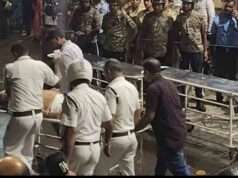
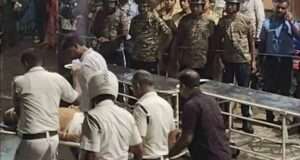
Bora was detained at Mandi House, where students and AISA members had gathered to participate in the demonstrations. Police also began detaining protesters who had reached Connaught Place, with an officer stating that those allegedly attempting to disrupt law and order were being taken into custody. Around 150 people had been detained by the time of the reported developments.
At Connaught Place, protesters moved through the inner circle, intermittently raising slogans of “Jai Hind” before dispersing and regrouping at different locations. Some demonstrators also sang the national anthem as police personnel monitored their movements.
At Mandi House, AISA members and students raised demands for the resignation of Chief Election Commissioner Gyanesh Kumar, withdrawal of the Special Intensive Revision (SIR) of electoral rolls and repeal of the Election Commissioner Appointment Act, 2023.
The detentions led to jostling among demonstrators, journalists, camera crews and security personnel at some locations. Minor altercations were also reported as police attempted to disperse gatherings. While police permitted some groups to march and raise slogans, the overall deployment remained focused on preventing escalation and maintaining public order.
Journalists and independent YouTube reporters covered the demonstrations, although some independent reporters were reportedly heckled during the proceedings.
Central Park, the proposed venue for the march scheduled for 5 pm, remained closed to the public on Friday and was scheduled to remain shut on Saturday as well.
Security personnel formed a human chain along the park’s metal railings, while a tear gas vehicle and a Vajra vehicle were stationed outside. Rapid Action Force personnel were deployed inside the park, and traffic police regulated vehicular movement along Connaught Place’s inner and outer circles.
Delhi Police Commissioner Anurag Kumar visited the office of the Deputy Commissioner of Police, New Delhi, at Parliament Street police station to review the security arrangements and assess the situation.
A senior police officer said the situation was peaceful and that personnel were working to remove protesters from restricted areas. The officer said the primary objective was to maintain law and order and ensure the smooth movement of traffic.
Authorities deployed more than 6,000 Delhi Police personnel and 220 companies of Central Armed Police Forces (CAPF), each comprising approximately 100 personnel, across the New Delhi area as part of the security arrangements.
The extensive deployment covered key locations, including Connaught Place and Mandi House, with personnel tasked with regulating crowds, enforcing restrictions and preventing any potential law-and-order disturbance.
The developments highlighted the continuing standoff between authorities and organisers of the proposed march, with protesters proceeding to designated gathering points despite the denial of permission. Police maintained that their measures were intended to enforce prohibitory orders, protect public movement and prevent disruption in the national capital.