
J&K Apni Party (JKAP) president Syed Mohammad Altaf Bukhari on Tuesday demanded an impartial and time-bound inquiry into the allegations of “negligence, malpractices or misuse of government infrastructure” in the Government Medical College (GMC) Associated Hospital, Rajouri.
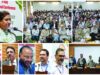
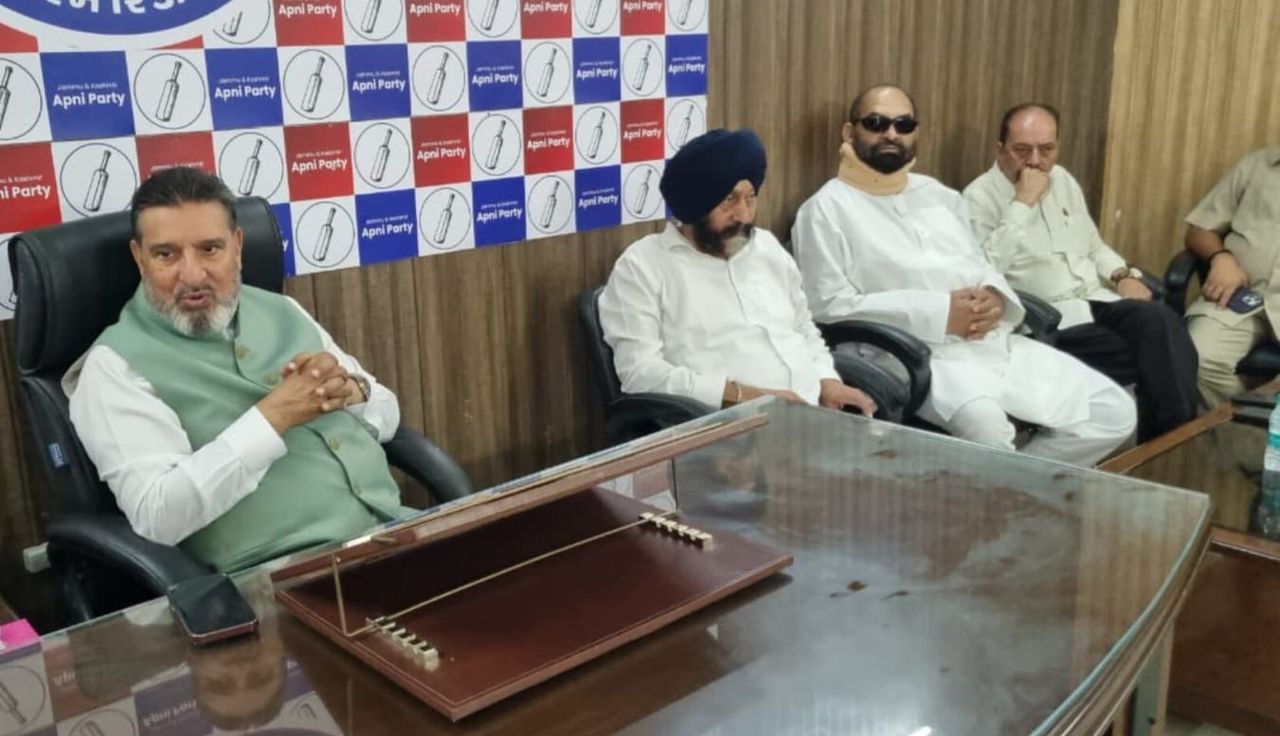
He was responding to concerns aired during a comprehensive review meeting of the party’s district units of Jammu wherein he took detailed-feedback from district presidents on organisational activities, public outreach programmes and issues confronting people across the Union Territory.
JKAP provincial president Manjit Singh was also present at the meeting, where the respective district presidents presented their report cards on party programmes and apprised the party leadership of the grievances being raised by people in their respective areas. Bukhari assured the district presidents of every possible support in taking up genuine public concerns with the government and administration.
The meeting discussed several issues affecting the daily lives of people, including the hike in power tariff, unscheduled power cuts, inflated electricity bills, damaged roads and lanes, poor drainage, inadequate civic amenities and alleged lack of response to public grievances. The district presidents sought greater intervention on issues which, according to them, have remained unresolved despite repeated representations.
One of the major concerns raised during the meeting related to the functioning of the Government Medical College Associated Hospital, Rajouri.
JKAP district president Rajouri Syed Manzoor Shah brought to the notice of Bukhari a series of serious concerns and allegations being raised by people regarding the functioning of the institution, which caters to a vast population extending from Gool-Gulabgarh in Reasi to the border areas of Poonch, besides residents of Rajouri and adjoining areas.
While apprising Bukhari of the situation, Manzoor Shah pointed to, what he described as “shortage of doctors and paramedical staff, non-functional or delayed commissioning of medical equipment, prolonged waiting periods for surgeries and diagnostic procedures, inadequate patient care and alleged involvement of intermediaries in directing patients towards private facilities.”
He further brought to the notice of the party president allegations that certain medical personnel might have links with private establishments and that possible vested interests affecting government healthcare services should be examined through an impartial inquiry.
He further brought to Bukhari’s notice concerns regarding the treatment of women arriving for childbirth, alleging that some patients were not being treated with the dignity, sensitivity and compassion required in such circumstances. He also referred to complaints regarding diagnostic testing, including an alleged instance of a major variation between a test conducted at the government institution and one subsequently conducted at a private facility and urged the authorities to verify such complaints and take appropriate action if any irregularity was established.
Taking serious note of the concerns brought before him, Bukhari said that issues concerning public healthcare required immediate attention, particularly when they affected people from remote, hilly, border and economically weaker areas. Bukhari maintained that government medical institutions must provide timely, affordable and quality treatment, supported by adequate manpower, functional equipment and a patient-friendly system. He said people travelling long distances to government hospitals should not be left without timely medical care or compelled to depend on costly private facilities because of deficiencies in public institutions.
He also supported the demand for an independent, impartial and time-bound inquiry into the concerns brought to his notice regarding the Rajouri medical institution. Bukhari said that allegations of negligence, malpractice, conflict of interest or misuse of government infrastructure, wherever found substantiated through a proper inquiry, should be dealt with appropriately.
Emphasising the importance of a strong public healthcare system, Bukhari assured the meeting that he would take up the matter with the government. He said he would write to Chief Minister Omar Abdullah and the Health Minister seeking their intervention for improving the functioning of government healthcare institutions and addressing the grievances of patients.
Bukhari further assured the district leadership that the JKAP would raise public issues across Jammu and Kashmir in a coordinated manner. He asked party leaders to remain closely connected with the grassroots and systematically bring genuine public grievances to the party forum for appropriate follow-up.
JKAP Provincial President Manjit Singh said the concerns brought from Rajouri appeared to reflect a wider problem in the public healthcare system. He brought to the notice of the meeting that people in Ramgarh, Vijaypur, Samba and Bari Brahmana were also facing difficulties due to shortages of doctors and paramedical staff and deficiencies in essential diagnostic facilities, including X-ray and ultrasound services.
Similar concerns were also raised by the party’s Bani unit. Singh called for strengthening manpower and infrastructure in government hospitals so that people, particularly those living in rural, hilly and border areas, could access essential medical services without unnecessary hardship.
Bukhari reiterated that the party would continue to stand with the people and its cadre through all adversities, maintaining that the objective of the review exercise was not only to assess organisational functioning but also to ensure that the genuine concerns of the people were raised effectively before the government and administration.
Prominent among those present were former MLA and senior vice president Faqir Nath; provincial vice president Arun Chibber; former MLA Prem Lal; SC wing president Bodh Raj; Kisan wing president Badri Nath; provincial secretary Ajaz Kazmi; provincial president women wing Pavneet Kour besides others.