



Srinagar, Oct 26: People’s Democratic Party (PDP) president Mehbooba Mufti on Monday said Jammu and Kashmir’s accession to India was founded on trust, secularism and constitutional assurances, alleging that the commitments made to the people had been undermined over the years, particularly after the abrogation of Article 370.
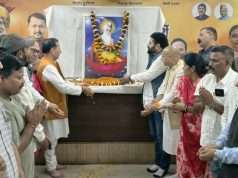
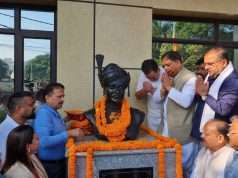
Addressing a party function on the 79th Accession Day at the PDP headquarters in Srinagar, the former chief minister urged people across the country to remember the ideals on which Jammu and Kashmir had joined India, saying the relationship was built on the expectation that J&K’s distinct identity, land and employment opportunities would be protected.
“I request all the people of the country that we have joined hands with such an India, which is the India of Gandhi, the India of Nehru, the India of Ambedkar, which gave us all the rights, which are being violated right now. I request them to remember this. This is not a piece of paper,” Mufti said.
She said Jammu and Kashmir had joined India despite being a Muslim-majority region because its people trusted the country’s secular leadership and believed their political aspirations and composite culture would be respected.
Referring to Articles 370 and 35A, Mufti said the constitutional safeguards were intended to protect the region’s limited land resources and employment opportunities, particularly given the challenges faced by its people in competing with those from outside.
“We trusted the leadership of India, but we had certain conditions,” she said, explaining that the arrangements were meant to prevent outsiders from purchasing land and competing for jobs in Jammu and Kashmir.
Mufti said the people had placed their faith in the vision of India’s founding leadership, including Mahatma Gandhi, Jawaharlal Nehru, B R. Ambedkar and Maulana Abul Kalam Azad, whom she described as proponents of a secular country where people of different faiths could coexist.
Recalling the circumstances surrounding the accession, she referred to Sheikh Abdullah’s role and the expectations associated with the arrangement, while pointing to 1953 as a turning point in the relationship between Kashmir and the Indian leadership.
“We do not know what went wrong, but by 1953, Sheikh Abdullah had turned against this arrangement,” she said.
The PDP president alleged that the abrogation of Article 370 had weakened the trust underpinning Jammu and Kashmir’s relationship with India and deprived its people of safeguards they believed had been promised to them.
She also questioned the Centre’s portrayal of the prevailing situation in the region as peaceful, arguing that the absence of public protest and open political expression could not be equated with normalcy.
“We’re not allowed to go out. We’re not allowed to talk, and BJP considers this silence to be peaceful. They consider it normal,” she said. “But this is not normal. This is fear, which is now being seen in the whole country.”
Mufti said Jammu and Kashmir was discussed at international forums and during political debates in other parts of India, but meaningful discussion of the region’s problems was missing within the Union Territory itself.
“The biggest thing is that Jammu and Kashmir is being talked about everywhere,” she said, referring to discussions at the United Nations, remarks by Turkish President Recep Tayyip Erdogan and the issue’s prominence in political debates during elections in other states.
“But where Jammu and Kashmir is not talked about, it is here,” she said.
She alleged that when the region’s situation was discussed locally, it was often through raids by investigating agencies, anti-terror laws, preventive detention and curfews.
“If it does get discussed, it is done through NIA, through CBI, through other agencies, UAPA, PSA and through curfews,” she said.
Mufti also raised concerns over what she described as continued suspicion and scrutiny of people in Jammu and Kashmir, citing raids conducted in the name of militancy, corruption and drugs.
She said some people who had surrendered years ago were still being called to police stations despite having since raised families.
The PDP president further highlighted the difficulties allegedly faced by young people seeking passports for education and employment, saying security-related restrictions were affecting their movement and opportunities.
“There are thousands of people, especially young ones, who don’t have passports, who want to go out for education, jobs,” she said.
She added that security checks were causing delays in daily travel, with journeys that should take an hour stretching to three hours.
Mufti called for a different approach to Jammu and Kashmir, advocating engagement and dialogue instead of reliance on force. Invoking former prime minister Atal Bihari Vajpayee’s approach, she said the region’s problems required political outreach and a willingness to address the concerns of its people.
“If you want to keep Jammu and Kashmir together, don’t drag it. Don’t drag it with your arms. Instead, hold its hand and teach it to walk with you,” she said.
Reiterating her appeal to people across India, Mufti said Accession Day should be an occasion to reflect on the circumstances, assurances and expectations associated with Jammu and Kashmir’s accession.
“We appreciate this day. Today we united with a great country, but we should also remember on what conditions, under which circumstances and with what emotions, we joined this country,” she said.