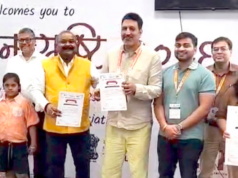


Srinagar, Oct 6: The CSIR-Indian Institute of Integrative Medicine (CSIR-IIIM), Branch Laboratory Srinagar, organised a one-day outreach programme on the conservation of critically endangered flora of the Kashmir Himalayas at its Field Station in Verinag on Tuesday.
Titled “Preserving the Paradise: Conserving Critically Endangered Flora of the Kashmir Himalayas”, the programme was organised under the CSIR Mission Mode Project on Bioresource Conservation and Prospection (BioCaP) to raise awareness about the conservation of endangered plant species and the importance of protecting the region’s rich floral diversity.
The programme brought together scientists, forestry experts, Forest Department officials and students to promote greater awareness about native plant species and their ecological and medicinal significance.
Director, CSIR-IIIM Jammu and CSIR-NBRI, Dr Zabeer Ahmed, attended the programme as the chief guest. Addressing the participants, he emphasised the need to create greater awareness among the younger generation about the importance of conserving natural resources and protecting biodiversity.
Dr Ahmed also highlighted the significance of India’s traditional knowledge, particularly relating to medicinal and aromatic plants, and stressed the need to integrate such knowledge with contemporary scientific research.
He said conservation efforts should not be limited to protecting plant species but should also encompass the preservation of traditional knowledge systems and the potential applications associated with these bioresources.
A key component of the programme was an interaction with Forest Department officials under the “Know Your Forests” initiative. The session familiarised participants with the importance of forests, threats facing native vegetation and the role of local communities and other stakeholders in conservation.
The “Tree Talk” activity introduced participants to native plant species and encouraged students to observe and understand the floral diversity in their surroundings.
The programme also featured a Conservation Innovation Challenge, providing young participants an opportunity to develop practical and innovative ideas for protecting plant biodiversity.
Under the “Healing with Nature” segment, medicinal plants and their healthcare applications were showcased, highlighting the link between the region’s plant resources, traditional knowledge and modern scientific research.
The outreach programme sought to strengthen awareness about the ecological and medicinal value of the Kashmir Himalayas’ flora while encouraging greater participation of students and local stakeholders in biodiversity conservation efforts.