


Srinagar, Sep 9: The crucial sub-committee meeting convened by the Union Ministry of Home Affairs (MHA) to address the political and constitutional future of Ladakh ended late Wednesday without any major breakthrough, according to representatives of the Leh Apex Body (LAB) and Kargil Democratic Alliance (KDA).
The meeting in the national capital brought together senior officials from the Home Ministry, representatives of the Ladakh administration, and a joint delegation of the LAB and KDA.
However, the Ministry of Home Affairs (MHA) and the leadership from Ladakh arrived at a consensus that the Union Territory, which was carved out following the 2019 reorganisation of Jammu and Kashmir, is set to receive a customised constitutional framework under Article 371, complete with its own elected legislative body.
Those who attended the Sub-Committee meeting in New Delhi included senior MHA officers, senior officials of the Ladakh administration, including Chief Secretary Ladakh Ashish Kundra, besides three members each from LAB and KDA, LokSabha member from LadakhMohdHanifa Jan, former MP ThupstanChhewang, Kargil Hill Council Chairman MohdJaffarAkhoon and former Leh Hill Council chief TashiGyalson, sources said.
They said that the Centre reiterated the proposal for a unique, sui generis governance structure under Article 371.
This special framework is designed to legally insulate the fragile cold-desert region from external demographic and environmental pressures.
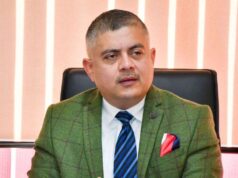
“Attended the sub-committee meeting with leaders of Ladakh at MHA in Delhi today. A general air of positivity prevailed as the broad contours of a sui generis model of governance under Article 371 of the Constitution were discussed. Deepening democracy is the goal,” Chief Secretary Ladakh Ashish Kundra said.
Sources said it was noted that the next logical step would be to further empower the Union Territory through a democratic institutional framework that provides a political voice.
After detailed deliberations, it was unanimously decided that while statehood would remain the long-term aspiration of Ladakh, in the present situation, as a first step, an appropriate customised model of governance by establishing a UT-level elected body with executive, financial and legislative powers would be established.
During the meeting, the model of constitutional safeguards under Article 371 was also discussed.
There have been instances of invoking Articles 371(A) to (J), and it was agreed that a customised sui generis model most suitable for Ladakh would be adopted.
It was decided that a draft proposal covering the powers and functions — executive, financial and legislative — of this UT-level elected body in harmonious relations with the PRIs would be prepared for further discussion and fine-tuning.
Speaking to Greater Kashmir about the overall atmosphere of the meeting, Chief Executive Councillor, LAHDC Kargil, Muhammad Jaffar, said that most of their reservations regarding constitutional safeguards, legislative powers and administrative issues were addressed during the discussions.
He said the government agreed in principle that all bureaucrats in Ladakh would function under an elected executive authority once the proposed governance framework is established.
“The meeting also witnessed discussions on the withdrawal of cases registered against more than 83 individuals detained during the protests of September 24. The government assured them that the cases will be studied and assured withdrawal of the cases in a phased manner,” Jaffar said.
Sources said that the next meeting will be held in October, for which the dates will be announced later.
Notably, two previous meetings of the Sub-Committee were held in Leh on July 3 and August 19.
They were attended by representatives of the MHA, senior officers of the UT administration, including the Chief Secretary, Sub-Committee members from the LAB and KDA, among others.
Meanwhile, a statement was issued by the Ladakh leaders after the sub-committee meeting concluded.
“LAB and KDA met with representatives of the Ministry of Home Affairs today in furtherance of the in-principle understanding arrived at in the meetings dated May 22 and July 3 on restoring democracy in Ladakh and providing constitutional safeguards by way of special provision under Article 371.
“The MHA stated that the intended UT-level body would be elected by direct election and would have legislative powers with respect to land, culture and language, forest, environment, natural resources, and any other subject matter reserved for the UT under Article 240. The elected body at the UT level would also have executive, budgetary, planning and financial powers.
“However, LAB and KDA observed that there is no clarity on overall areas, including law and order, as seen in the UT of Puducherry, which is necessary for proper governance,” the statement said.
“The MHA also assured that a compensation package for those who lost their lives and were injured in the September 2025 agitation would be given. LAB and KDA sought that all cases registered against persons in respect of the September 2025 incident be withdrawn at once and not be done in phases. MHA assured that the same was being looked into.
“The MHA has assured that further talks will be held in the first week of October, during which a draft Article would be discussed. The MHA is expected to seek further comments on some broader issues from LAB and KDA shortly.
“The LAB and KDA unanimously stated that no major irreversible restructuring should be done in governance mechanisms, land transfers, etc., before an elected body at the Union Territory level is in place.
“LAB and KDA have unanimously declared that in the event of any such irreversible changes being made to the administrative and political setup of Ladakh before the UT-level democratic body is constituted, they would be compelled to call upon a public protest against such moves,” it said.