



Srinagar, Oct 25: The Directorate of Information Technology and Support Systems (IT&SS), University of Kashmir (KU) successfully developed and implemented an AI-powered facial biometric recognition and verification mobile application for the JKSET, LASET examination conducted on Sunday across J&K and Ladakh.
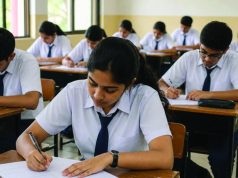
As per the official figures, out 16,821 registered candidates, including 8342 from the Jammu Division, 7722 from the Kashmir Division and 757 from Ladakh, 13,252 appeared for the examination.
“The mobile application facilitated technology-assisted identity verification through more than 700 invigilators and examination personnel deployed across examination centres,” the handout reads.
The application enabled examination personnel to capture candidates’ live photographs along with the geolocation of the verification site.
“Using facial recognition algorithms, the captured photographs were automatically compared with the photographs submitted by candidates during the application process, generating matched or unmatched verification results to support reliable candidate identification,” it reads.
The solution integrates pre-trained facial recognition models to analyse and compare facial features, enabling efficient, AI-assisted biometric identity verification at examination centres. “Its mobile-based implementation streamlined the verification process and reduced dependence on manual identity checks,” the handout reads.
Deployed on the University of Kashmir’s Data Centre infrastructure, the application was designed to support concurrent access by examination personnel across multiple centres, facilitating responsive and smooth operation during the examination.
“Deploying the solution on the University’s local infrastructure also enabled greater institutional control over data processing and the handling of examination-related information,” it reads.
Data privacy and information security were integral considerations in the implementation.
Encryption safeguards were employed to protect sensitive candidate information and secure data transmission, helping maintain the confidentiality and integrity of examination-related data.
“This initiative underscores varsity’s continued commitment to leveraging indigenous technological innovation, artificial intelligence and digital transformation to strengthen examination management, improve operational efficiency, and promote transparent, reliable and secure examination processes across Jammu and Kashmir and Ladakh,” the handout reads.
The successful implementation demonstrates the potential of AI-powered facial biometric verification to support the integrity and efficiency of large-scale examinations through technology-driven identity authentication.
In the Jammu Division, examination centres were located at five main centres in Jammu, Kathua, Rajouri, Udhampur and Bhaderwah.
In Kashmir division, three main centres were established at Srinagar, Anantnag and Baramulla, while Leh and Kargil served as the main centres in Ladakh.
The centres were spread across the regions to facilitate candidates’ access to the examination.
Vice-Chancellor KU Prof. Nilofer Khan visited examination centres across Srinagar to review the arrangements and oversee the smooth conduct of the examination.
She was accompanied by a team of University officials and faculty members.
Prof Khan thanked the civil and police administrations of Srinagar, Anantnag and Baramulla, for their support and cooperation in ensuring the smooth conduct of the examination.
“The smooth conduct of JKSET/LASET reflects the coordinated efforts of the University team and the support extended by the district and police administrations. We remain committed to ensuring a fair, transparent and well-organised examination process for all candidates,” she said.
Prof Khan, along with Member Secretary JKSET, LASET Agency, Prof Aijaz Ahmad, and the team, visited several examination centres within and outside the main campus to take stock of the arrangements.
To facilitate the movement of candidates, the university also made special transport arrangements, deploying buses along designated routes to ensure convenient access to examination centres.