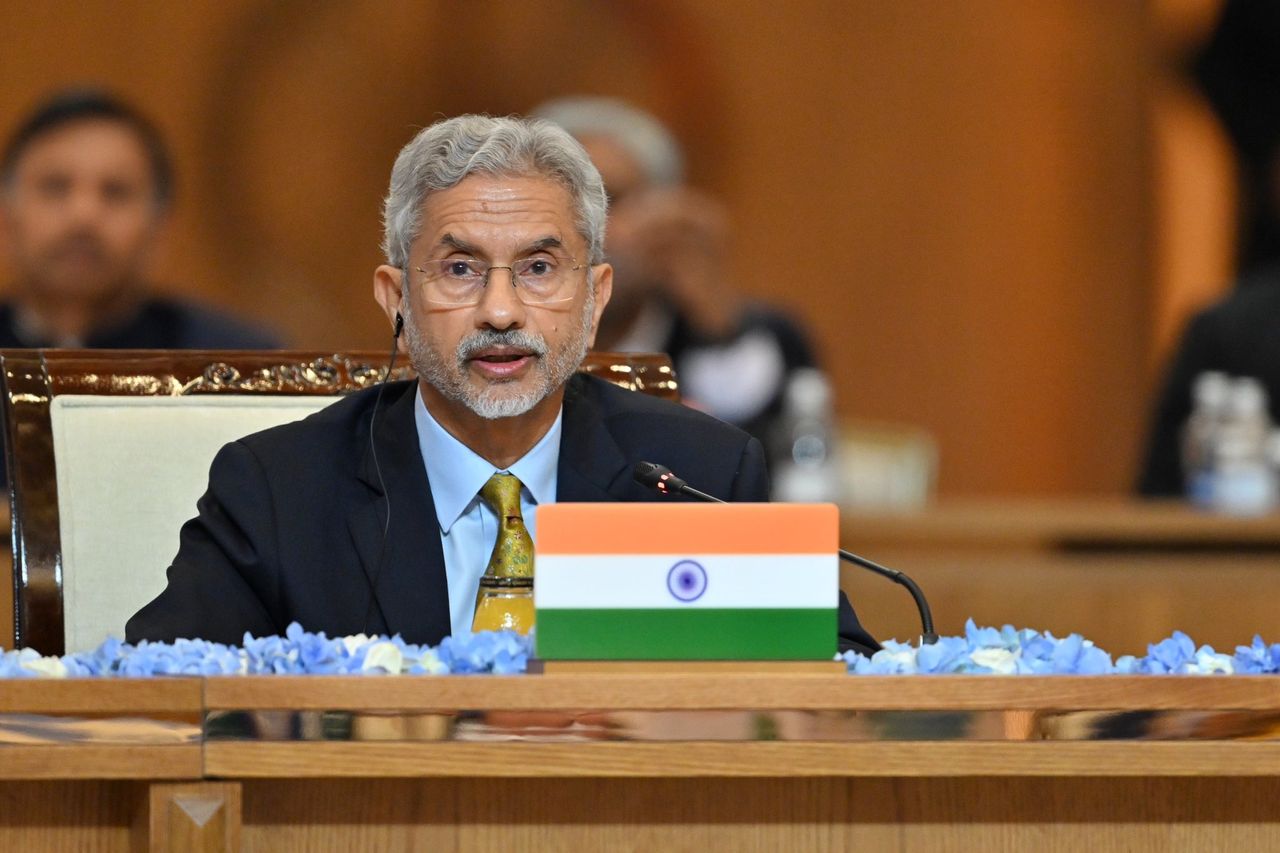

New Delhi, Sep 14: The BRICS Summit took place in the backdrop of a “very polarised world” and “we forged a consensus” in the midst of it, External Affairs Minister S Jaishankar said on Monday, as he described the mega event hosted under India’s chairship a success.
Interacting with mediapersons here, he also spoke about what was definitely the “toughest issue of the day”, the West Asia conflict, saying, “We were able to get out a statement to which everybody agreed.”
The BRICS members adopted a joint New Delhi Declaration on Saturday after overcoming sharp divisions between the UAE and Iran regarding the West Asia conflict while notably omitting direct mention of the US for its attacks on Iran.
The negotiations on the text of the declaration went down to the wire as both Iran and the UAE hardened their positions initially.
Prime Minister Narendra Modi announced the adoption of the declaration at the end of the opening day’s deliberations in the presence of Chinese President Xi Jinping, Russian President Vladimir Putin, Iranian President Masoud Pezeshkian, Abu Dhabi Crown Prince Mohamed bin Zayed Al Nahyan and other top leaders of the bloc.
“The BRICS Summit was taking place in a very polarised world – there were two major conflicts, big divides and very strong opinions and interests. Even in the midst of this polarisation, we actually forged a consensus. If you look at it, the toughest issue of the day was the West Asia conflict. But we were able to get out a statement to which everybody agreed,” Jaishankar said.
“A statement urging peace, security, stability, long-term understanding, smooth flow of global trade, of supply chains, of energy, and protection of civilians and civilian infrastructure,” he added.
Jaishankar said it wasn’t just that “we were able to negotiate an understanding in a polarised world”, the entire atmosphere and ethos, and the mood of the summit which ended Sunday was such that there were “very open and comfortable conversations”.
“Leaders met, who perhaps in other circumstances may not have met. So they met in the course of this summit. And it actually ended up contributing a lot to the global conversation on important issues,” Jaishankar said, without naming any country.
Several bilateral meetings were held on the sidelines of the summit hosted at the Bharat Mandapam complex.
Strategic affairs experts said the bilateral meeting between the Abu Dhabi crown prince and the Iranian president was also significant, pointing to the backdrop of the ongoing conflict in West Asia.
Jaishankar said the “whole nation and indeed the world saw the success of the BRICS India Summit yesterday”.
As many as 32 delegations had come for the summit – 11 from BRICS member states, 10 partners, four regional bodies and seven international organisations, he added.
Noting that it signified the “strong convening power of Modi’s India”, as most of the delegations were represented at the head of state or the head of government level, Jaishankar cited the names of presidents of Russia, China, Iran, South Africa, Indonesia, Egypt, as well as the Abu Dhabi crown prince and Prime Minister Abiy Ahmed Ali of Ethiopia.
“And all of them, as you also would have seen from the footage and coverage of the event, had very strong personal rapport with Prime Minister Modi,” he said.
The summit had its own agenda, which was focused on the economy, development and technology for the Global South, he underlined.
“Standing up for the Global South – that was a very strong message which came out. And the two themes, the two sessions… The first session was on reform, the second was on resilience. And these were uniting themes, themes where countries tended to come together… That was part of the reason why we saw the consensus,” Jaishankar said.
He also acknowledged the grouping’s stand on terrorism and the leaders condemning the Pahalgam terror attack.
“I also want to say that the consensus was very noteworthy on one issue – terrorism. The BRICS was very clear that any act of terrorism is criminal, and it explicitly recognised the unacceptability of the Pahalgam attack of April 2025.
“They condemned terrorism in all its forms and manifestations, including cross-border terrorism, and emphasised the zero-tolerance approach towards terrorism, and rejected double standards in countering it.
“Overall, I would say the prime minister’s message of dialogue, diplomacy and development resonated around the world,” Jaishankar said.
In conclusion, he said, “Many people said it (the summit) won’t happen. It did happen. It happened in New Delhi, and it happened under Prime Minister Modi’s leadership.”