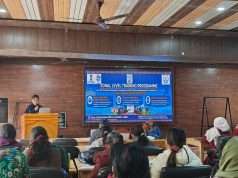



 LEH, OCT 24: Strengthening the global identity of Ladakh Pashmina through scientific authentication, sustainable livestock production, geographical indication (GI) protection and premium branding remained at the centre of deliberations on the second day of the Ladakh Pashmina Conclave 2026, as experts called for an integrated approach to improving fibre quality, protecting authenticity and expanding market opportunities for the region’s traditional Pashmina industry.
Held at Ladakh Sarai Resort in Ayu, Saboo, the conclave brought together scientists, researchers, industry representatives, entrepreneurs and other stakeholders to explore ways of strengthening the entire Pashmina value chain, from high-altitude pastoral production to processing, certification and access to domestic and international markets.
The discussions placed particular emphasis on ensuring that improvements in production and marketing translate into sustainable livelihoods for Changpa pastoralists, artisans and other communities associated with Ladakh’s distinctive fibre heritage.
A technical session on Goat Production, Grassland Restoration and Fibre Yield examined the relationship between sustainable livestock management, the conservation of high-altitude grazing areas and improvements in Pashmina productivity.
Presentations were delivered by Dr Feroz Din Sheikh, Professor of Animal Genetics and Breeding at the University of Ladakh’s High Altitude Agriculture Research Institute (HAL.RI), Stakna Campus; Dr Khursheed Ahmad Dar of SKUAST; Dr Ronnie Lamb, who joined online; and Dr Rashmi Singh, who addressed the International Year of Rangelands.
The deliberations highlighted the importance of protecting fragile rangeland ecosystems while exploring scientific approaches to improving fibre yield without compromising quality. Participants also examined the potential of yak and sheep wool as complementary resources for sustainable livelihoods among pastoral communities.
The discussions underscored the need to align livestock productivity with the ecological realities of Ladakh’s high-altitude environment, where the sustainability of grazing resources remains closely connected to pastoral livelihoods.
Another major focus was the modernisation of spinning, weaving, fibre testing and certification systems to strengthen the quality and commercial value of Ladakh Pashmina.
R. Naresh, Founder and Managing Director of Shuttles & Needles Private Limited and distributor of Ashford India, shared insights into modern tools and techniques for processing and value addition.
Experts from CSIR–Centre for Cellular and Molecular Biology and the Pashmina Certification Centre discussed scientific authentication, quality assurance and the evolution of certification mechanisms. Their deliberations highlighted the importance of reliable testing systems in distinguishing authentic Pashmina from other fibres and protecting its identity in increasingly competitive markets.
Effective authentication can help build consumer confidence, support quality-based pricing and strengthen the credibility of Ladakh Pashmina among domestic and international buyers.
The session on Cooperatives, Proof of Origin and Geographical Indication examined how traceability and collective marketing can help safeguard the identity of authentic Ladakh Pashmina while improving the position of producers within the value chain.
Participants discussed the Pashmina Mark initiative of the Textiles Committee and Central Wool Development Board, GI implementation and lessons from the branding of Kashmir Pashmina.
The discussions highlighted the role of cooperatives and producer collectives in establishing credible proof-of-origin mechanisms, protecting traditional knowledge and ensuring that the commercial benefits associated with authentic Pashmina reach the communities responsible for producing and processing it.
For Changpa pastoralists and artisans, stronger traceability and certification systems could help establish a clearer connection between the fibre’s origin, its authenticity and its market value.
The afternoon session on Branding, Packaging and Marketing focused on positioning Ladakh Pashmina as a distinctive premium product by combining its traditional heritage with contemporary design, presentation and market strategies.
Karun Ahuja, Director of Ahujusons, was scheduled to speak on developing an umbrella brand for Ladakh Pashmina, while Prithvi Ranjan and Pragya Dubey of the National Institute of Design were scheduled to share perspectives on branding, packaging and storytelling. Ahmad Naqush was also scheduled to discuss Pashmina’s legacy and its contemporary market potential.
The session aimed to explore how a recognisable regional brand, supported by credible certification and effective storytelling, could improve product visibility and help Ladakh Pashmina compete in premium markets.
Brand development, participants’ discussions suggested, must go hand in hand with quality assurance, transparent sourcing and greater value addition if the region’s pastoral communities and artisans are to benefit from expanding commercial opportunities.
The second day of the conclave reinforced the importance of connecting sustainable pastoralism with scientific research, modern processing, certification, GI protection and market development.
The event provided a platform for collaboration among government departments, scientific institutions, industry experts, cooperatives and entrepreneurs, with discussions extending across the complete Pashmina value chain.
The broader challenge remains to protect the ecological foundations and traditional knowledge underpinning Ladakh’s Pashmina production while developing the quality standards, branding and market linkages required to enhance its commercial value.
By bringing together research, industry expertise and community perspectives, the conclave is seeking to strengthen Ladakh Pashmina’s market identity while supporting the livelihoods of the pastoralists and artisans who sustain this distinctive regional heritage.