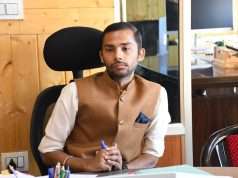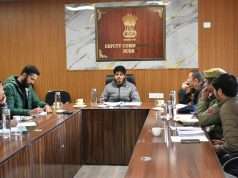



 LEH, OCT 27: Chief Secretary of the Union Territory of Ladakh, Ashish Kundra, on Tuesday held consultations with representatives of religious organisations, including the Ladakh Buddhist Association (LBA), to discuss the demand raised by women’s religious groups for a complete prohibition on liquor in Ladakh. The meeting focused on the social, cultural and economic implications of declaring the Union Territory a dry region, with the administration emphasising the need for wider consultations and consensus before taking any decision.
The meeting was attended by Excise Commissioner Romil Singh Donk; representatives of the All Ladakh Gompa Association (ALGA); the President of the Ladakh Buddhist Association; the President of Anjuman Imamia, Leh; and representatives of ALGAHA and ALTOA, among others.
During the deliberations, women representatives expressed concern over the number of liquor licences issued in Ladakh and pressed for a complete ban, citing the region’s cultural values, social concerns and community sentiments. They called for the administration to give due consideration to the demand and its implications for Ladakh’s society.
The meeting was informed that the Excise Policy 2026–27 had been rolled back following public sentiment, and the Excise Policy 2025–26 had been reinstated and was currently in force.
Providing details of liquor licences under the reinstated policy, officials informed the participants that the number of retail liquor vends, which stood at two until last year, had been reduced to one functional outlet this year. However, the number of functional bars attached to restaurants offering retail sale of liquor had increased from 23 to 40 following the issuance of 17 additional licences.
Acknowledging the concerns raised by the women’s representatives, Chief Secretary Kundra said the demand for declaring Ladakh a completely dry Union Territory was a significant issue requiring careful consideration and consultation with all concerned stakeholders.
He referred to the experiences of other states, including Bihar and Haryana, and cautioned that prohibition policies could have unintended consequences, including the proliferation of spurious liquor and drugs. He stressed the need to examine the potential social consequences of prohibition alongside the cultural and religious concerns raised by the community.
The Chief Secretary also highlighted the economic implications of a complete liquor ban, particularly for employment, tourism and related commercial activities. Noting that tourism was the primary economic activity in Ladakh, he underlined the importance of consulting representatives of the hotel industry, tour and travel operators and other stakeholders who could be affected by a policy change.
He maintained that any decision on the issue should emerge from a broad-based consultative process involving religious organisations, hotel associations, tour and travel operators’ associations and other relevant groups. Such consultations, he said, would help ensure that social sensitivities, cultural traditions, economic interests and public concerns were adequately considered.
As an immediate step, the Chief Secretary suggested that the President of the Ladakh Buddhist Association convene a wider consultation to build consensus and explore a possible middle-ground solution acceptable to the different stakeholders.
Reiterating the administration’s flexible approach to public policy, Kundra assured the representatives that the government remained open to constructive suggestions and a balanced solution. He added that another meeting involving a wider group of stakeholders could be convened soon, if required.
The meeting concluded with an emphasis on continued dialogue and mutual understanding, with the administration seeking to balance the demand for prohibition with the broader social, cultural and economic considerations affecting Ladakh. No final decision on a complete liquor ban was announced, and further consultations are expected to help determine the way forward.