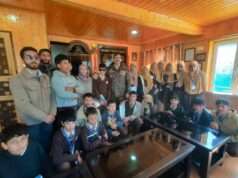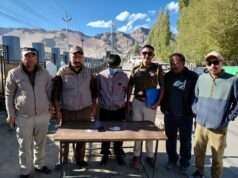



 LEH, OCT 19: Dr. Afroz Ahmad, Expert Member of the National Green Tribunal (NGT), Principal Bench, New Delhi, on Monday chaired a high-level review meeting in Leh to assess compliance with the tribunal’s directions concerning the District Environment Plan, with particular emphasis on pollution control, sustainable waste management, conservation of ecologically sensitive areas and protection of Ladakh’s fragile ecosystem.
The meeting, held at the Conference Hall of the Deputy Commissioner’s Office, Leh, brought together senior officials of the Union Territory administration and concerned departments to review ongoing environmental protection measures, assess implementation challenges and identify areas requiring stronger enforcement and interdepartmental coordination.
Among those present were Rajesh, Indian Forest Service officer and Additional Principal Chief Conservator of Forests, Union Territory of Ladakh; Deputy Commissioner Leh Romil Singh Donk; Senior Superintendent of Police Fulzele Piyush Nirakar; Mandeep Mittal; and officers from various departments.
A comprehensive presentation highlighted Ladakh’s longstanding traditions of environmental conservation while drawing attention to emerging pressures on its natural resources, particularly during the summer tourist season. The discussions focused on ensuring that development, tourism and growing waste-generation demands are managed without compromising the ecological sustainability of the high-altitude region.
The meeting reviewed air-quality monitoring and periodic river-water testing undertaken by the Ladakh Pollution Control Committee. Officials informed the participants that monitoring was being conducted at designated locations and that the parameters assessed generally remained within prescribed standards.
Traditional dry-toilet practices, through which human waste is converted into manure for agricultural use, were also highlighted as an important local approach to reducing untreated sewage discharge into rivers. The discussions underlined the need to strengthen sustainable sanitation systems and explore appropriate solutions to emerging wastewater-management challenges.
The conservation of ecologically sensitive lakes and wetlands, particularly the Ramsar sites of Tso Kar and Tsomoriri, received considerable attention during the meeting.
Dr. Afroz Ahmad emphasised the need for clearly demarcating lake boundaries and installing physical boundary markers to prevent encroachment. He also called for stronger monitoring mechanisms through dedicated lake-level committees and coordinated action involving district authorities, local bodies and Panchayati Raj institutions.
The deliberations highlighted the importance of protecting these sensitive ecosystems from encroachment, pollution and other pressures while strengthening institutional responsibility for their long-term conservation.
Implementation of the ban on single-use plastics and compliance with the Solid Waste Management Rules, 2016, also figured prominently in the review. Measures discussed included intensified inspections, penalties for violations, four-way waste segregation and public awareness campaigns in local languages.
Dr. Afroz Ahmad suggested exploring community radio as an additional medium for environmental education, particularly in remote areas, to encourage responsible waste disposal and improve public participation in conservation efforts.
The administration also presented details of waste-management infrastructure across Leh, including approximately 30 Solid Resource Management Centres in rural areas. Door-to-door waste collection, plastic recycling and the use of processed multilayered packaging in road construction were among the initiatives reviewed.
The need to strengthen electronic-waste collection and ensure its proper disposal was also highlighted.
According to the presentation, Leh has a reported waste-processing capacity of approximately 30 tonnes per day. The registration of around 100 bulk wet-waste generators was also noted, with these establishments required to compost wet waste and hand over segregated dry waste for appropriate processing.
Officials discussed the seasonal pressures placed on waste-management infrastructure by increased tourist arrivals, along with issues concerning faecal sludge treatment and the potential reuse of treated wastewater for irrigation.
The discussions emphasised the need to strengthen waste-processing facilities, improve segregation at source and develop sustainable systems capable of managing both routine waste generation and seasonal increases in demand.
Plantation initiatives in municipal parks and along canals were also highlighted as part of ongoing efforts to enhance green cover and ecological conservation. The planting of species such as apricot, apple and sea buckthorn featured in the presentation on local greening initiatives.
Appreciating the environmental measures undertaken in Ladakh, Dr. Afroz Ahmad stressed that compliance with NGT directions must translate into measurable action on the ground. He called for science-based interventions, stronger institutional coordination and effective implementation of environmental safeguards to protect rivers, lakes, wetlands and other natural resources.
He also underscored the importance of community participation in preserving Ladakh’s unique natural heritage, noting the need for coordinated efforts by government departments, local institutions and residents to address environmental challenges.
The meeting concluded with an emphasis on strengthening interdepartmental coordination and ensuring effective implementation of the District Environment Plan for Leh, with compliance monitoring, pollution prevention and sustainable waste management remaining central to safeguarding the region’s fragile ecosystem.