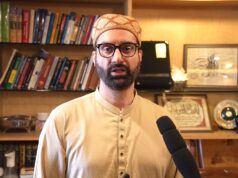
Jammu and Kashmir Apni Party (JKAP) president Syed Mohammad Altaf Bukhari on Wednesday asserted that only dialogue and persuasion, and not confrontation, would help in restoration of statehood to J&K.
Aiming barbs at the ruling dispensation and the opposition, Bukhari, while responding to media queries after a party function in Jammu, maintained that both (government and opposition) had lost their way and thus failed in addressing the public issues, notwithstanding their haughty claims and big promises.
The query related to the performance of the elected government as it would complete its two years in office in October.
“Like the Apni Party does – only those promises should be made which are practical and achievable and not the claims which aim at hoodwinking innocent people,” he stated.
In a direct dig at the ruling party and other political opponents, J&K Apni Party president and the former minister observed, “Just for the sake of it, they can promise to bring back Article 370 but that is not enough. They should come clear on the fact as to how they will get it back. They can promise “moon and stars” to the people. But how will they bring them? This needs to be explained to us, the people.”
While slamming the dismal performance of the government, he, however, clarified that his party would never support any undemocratic means or attempts to remove it (government). “Elected government is the last democratic gift by the Centre to J&K. If this government has to go, the people will take a call. We will continue opposing it (government) if it pursues anti-people policies but will never support any undemocratic attempt to oust it (government).
Opposition does not mean validation for removal of democratic government through undemocratic means,” Bukhari asserted.
He said political disagreements and opposition should be pursued through democratic means and maintained that opposition to a government should not mean opposition to democratic institutions.
Bukhari also batted for wider debate on reservation policy and proposed changes. He stated that the reservation and proposed changes concerning different categories required detailed discussion rather than political statements.
The JKAP president raised questions about how reservation benefits should be distributed and whether benefits should continue to remain concentrated among particular families or individuals. He said the matter was important enough to merit a detailed seminar and wider public discussion.
In response to a question about restoration of statehood to Jammu and Kashmir, Bukhari said, “Besides dialogue, there is no way, and certainly not confrontation, to get statehood restored in J&K, a 200-year-old State. J&K has witnessed confrontations since 1947 and has not brought any solution. The confrontation would not help and that the political leadership must put forward a reasoned and convincing case before the Union Government,” Bukhari stated.
He said Jammu and Kashmir had a long historical and constitutional association with the Indian Union and argued that the demand for statehood should be taken forward through democratic engagement.
In this context he also referred to the case of Ladakh, asserting if 2.5 lakh people there (Ladakh) collectively could make their voice heard, 13 million people of J&K could also take a cue from them.
On the ongoing strike by National Health Mission (NHM) employees and their demand for an increase in remuneration, Bukhari termed their demand legitimate and urged the administration to wake up and address their grievances. He questioned the functioning of the health administration and said that the Chief Secretary, being the head of the administration, must take serious note of the problems confronting the health sector and ensure corrective measures.
Responding to a question on the Uniform Civil Code (UCC), Bukhari said the immediate concern should be the survival and well-being of the people of Jammu and Kashmir. He questioned the priority being given to wider political debates when basic healthcare services remain inadequate.
Referring to the employment situation, Bukhari said Jammu and Kashmir had a large pool of educated youth seeking opportunities and maintained that providing jobs and livelihood opportunities must be among the foremost priorities of any government.
Asked about the proposed all-party meeting and whether it could lead to any significant decisions, Bukhari said political meetings should ultimately focus on matters affecting the people. He emphasised that issues concerning employees, students, healthcare, taxation and public welfare should receive serious attention.
On questions concerning financial burdens and taxation, Bukhari said the government should be cautious about adding to the burden of employees, students and other sections already facing difficulties. He particularly referred to healthcare personnel and interns and said their genuine concerns should be addressed.
Referring to the situation in Bani, he said he had learnt that the Sub-District Hospital had been without a gynaecologist for around a decade, forcing women to travel long distances for childbirth and specialised medical care. He also referred to a sonography machine reportedly lying unused at a hospital because of the absence of a person to operate it.
Questioning the mismatch between infrastructure and manpower, he said providing equipment alone was not enough unless trained personnel were available to deliver services.
Bukhari also raised questions about the functioning of Rajouri Medical College and alleged that a substantial proportion of patients were being referred to Government Medical College Jammu. He also criticised BJP for patting its back on establishing AIIMS in Vijaypur when patients from there were being referred to Government Medical College Jammu. He called for an examination of the functioning of healthcare institutions and said human lives could not be compromised.
Questioning the electricity woes being confronted by consumers, he pointed out that Jammu and Kashmir contributed power to the northern grid while ordinary people within the region continued to face high electricity charges.
Similarly, he questioned the gap between announcements regarding tap water and the actual availability of drinking water in different areas, saying that access to safe drinking water should be treated as a basic public necessity rather than merely a political slogan.
Bukhari also raised allegations of corruption and delays in government offices, saying citizens should not have to face unnecessary hurdles to obtain legitimate government services. He called for greater administrative accountability and transparency. Asked about criticism that the Apni Party was B team of BJP and maintained close links with the Union government, Bukhari rejected the suggestion that meeting Union leaders amounted to political subservience.
He said political leaders from Jammu and Kashmir had every right to meet the Prime Minister and other Union leaders to place the concerns of the people before them. According to him, engagement with the union government was part of democratic politics and should not automatically be portrayed negatively.
Responding to allegations, Bukhari said his party was not controlled by any political family. He reiterated that the Apni Party was intended to be a platform for the people and claimed that its strength came from its workers and public support.
On questions relating to reservation and proposed changes concerning different categories, Bukhari said the issue required detailed discussion rather than political statements. He raised questions about how reservation benefits should be distributed and whether benefits should continue to remain concentrated among particular families or individuals. He said the matter was important enough to merit a detailed seminar and wider public discussion.
On speculation regarding possible political changes within the National Conference, Bukhari said he did not foresee any “fall of sky” and remarked that if one person resigned, another could take his place. He maintained that the internal affairs of another political party were ultimately for that party to decide.
JKAP president appealed to the people of Jammu and Kashmir to rise above politics based solely on religion and regional divisions. He said the people of Jammu had been mobilised in the name of religion while people in Kashmir had, according to him, been mobilised in the name of the region. The need of the hour, he said, was to focus on common issues affecting people across Jammu and Kashmir.
He called upon people, particularly the youth, to become more politically aware and take charge of their future, saying that employment, healthcare, electricity, drinking water, accountable governance and development should occupy the centre stage of political discourse.
Earlier while addressing a joining programme at the party headquarters in Gandhi Nagar, Jammu, Bukhari called upon the youth to take an active role in shaping the future of Jammu and Kashmir. He said meaningful political change could come only when the younger generation would take charge of the region’s political and social affairs.
Former NSUI Joint Secretary Tableen Bobarai, along with nearly 200 youths and around 100 prominent citizens from Arnia, joined the Apni Party in the programme. The programme was organised by J&K Apni Party Jammu provincial president Manjit Singh.
Welcoming the new entrants, Bukhari congratulated Tavleen Singh and the other members of the joining groups and expressed confidence that their induction would further strengthen the party at the grassroots level.
“Youth have to bring change. Until you bring the change, the politics of Jammu and Kashmir will also not improve,” he said, urging the young entrants to actively participate in public life.