
At a time when traditional household practices are gradually disappearing amid changing lifestyles, Abida Hameed of Shirpora in Pattan has revived an age-old Kashmiri practice and turned it into a source of livelihood.
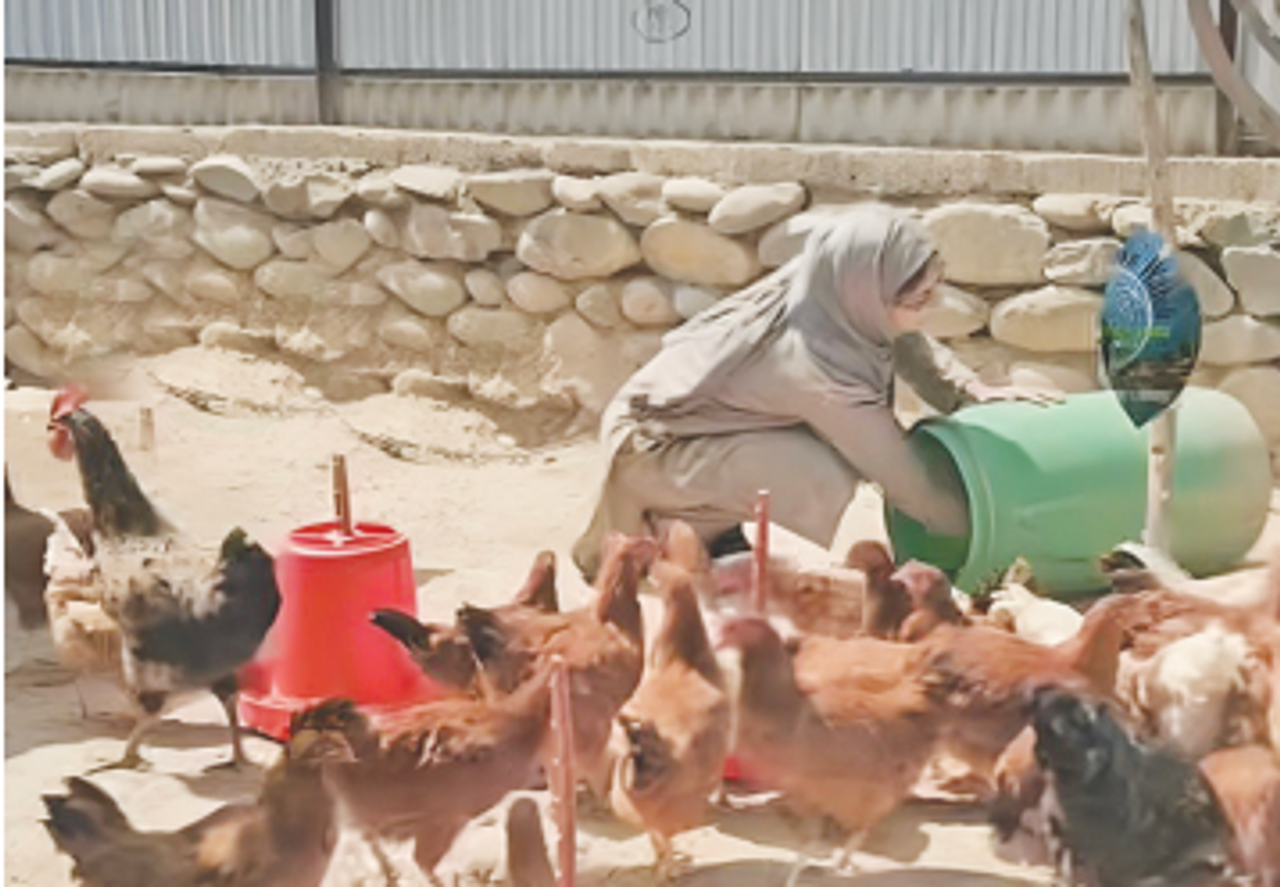
What began with just a few desi hens, primarily to ensure a supply of traditional eggs for her children, has now grown into a small poultry enterprise with more than 250 birds.
Abida started the unit on her own, without any initial assistance, and gradually expanded it as demand for desi eggs and traditional poultry grew.
For her, the venture was not initially about starting a business. It was born out of the difficulty of finding genuine desi eggs in the market.
“I started this mainly because I wanted to feed my children desi eggs. Keeping desi hens at home was once common, but that tradition is slowly disappearing. I found it increasingly difficult to get desi eggs, so I decided to keep hens myself,” Abida said.
She later approached the Animal Husbandry Department seeking assistance but encountered difficulties in setting up the infrastructure required for the poultry unit.
“I found it difficult to construct a concrete shed in the beginning. Instead of waiting, I decided to start on my own and built a wooden shed for the hens,” she said.
That modest beginning has since developed into a growing enterprise. Abida now keeps more than 250 hens and says she is receiving a good response from the local market, with demand for both desi eggs and traditional hens remaining strong.
“Today, I have more than 250 hens. There is good demand for desi eggs and hens, and I am satisfied with the response I am getting from this business,” she said.
Her journey also reflects a broader economic tradition in Kashmir, where poultry and small-scale household farming once formed an important part of rural livelihoods. Keeping desi hens at home was common, and eggs and poultry were often sold by families to meet everyday household expenses and purchase essential items.
With changing lifestyles, however, such traditional practices have gradually declined. At the same time, demand for desi poultry has given the practice a renewed commercial value.
Desi eggs are currently fetching around Rs 25 to Rs 30 a piece in the local market, while there is also steady demand for desi hens among consumers who prefer traditional poultry over commercially raised broilers.
For women like Abida, the revival of such traditional livelihoods offers more than an additional source of income. It provides an avenue for economic independence while reconnecting rural households with practices that were once an integral part of Kashmir’s economy.
Her experience also demonstrates how a small household activity can gradually develop into an income-generating enterprise when linked with market demand.
At a time when government employment opportunities remain limited, Abida’s journey from keeping a few hens for her children to maintaining a flock of more than 250 birds shows how traditional skills and local resources can be turned into sustainable livelihood opportunities.