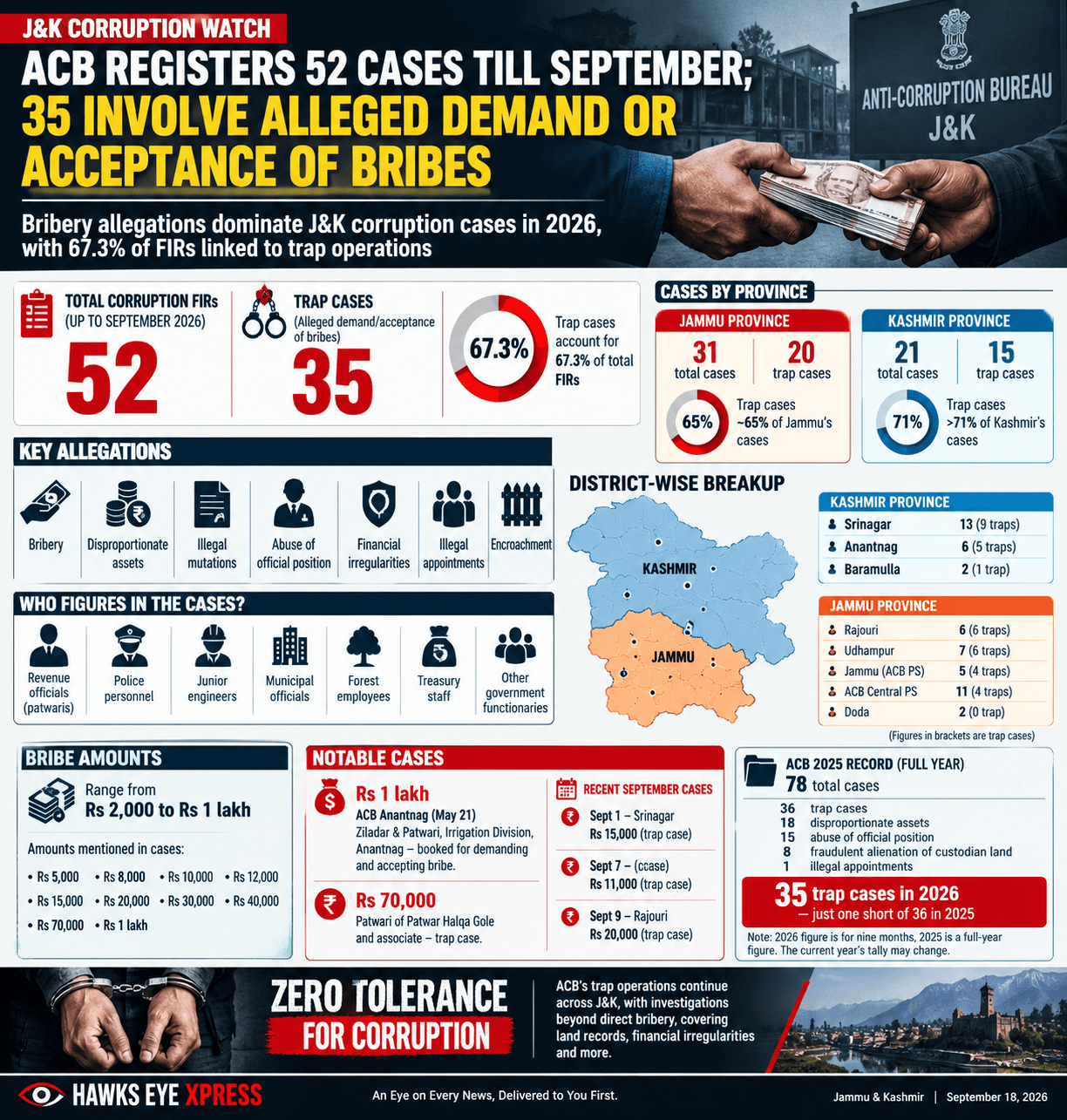
 JAMMU, SEPT 18: Bribery allegations continue to dominate the corruption cases registered in Jammu and Kashmir, with the Anti-Corruption Bureau (ACB) recording 52 corruption-related FIRs across the Union Territory up to September 2026, including 35 trap cases involving alleged demand and acceptance of illegal gratification.
The 35 trap cases constitute 67.3 per cent of the total FIRs registered by the ACB so far this year, meaning roughly two out of every three corruption cases recorded by the Bureau have involved allegations of direct bribery.
The ACB case register shows that the cases are spread across different districts and government departments, covering allegations ranging from bribery and disproportionate assets to illegal mutations, abuse of official position, financial irregularities, illegal appointments and alleged encroachment.
Of the 52 cases, 31 were registered in Jammu Province, including 20 trap cases, while 21 cases were registered in Kashmir Province, including 15 trap cases.
Trap cases consequently account for around 65 per cent of the Jammu cases and more than 71 per cent of those registered in Kashmir.
Revenue-related officials figure prominently in the trap cases, particularly patwaris, with allegations involving payments for revenue extracts, mutations and other official work.
Police personnel, junior engineers, municipal officials, forest employees, treasury staff and other government functionaries also figure among those booked in cases registered during the year.
The district-wise figures show a particularly high concentration of trap cases in Rajouri and Udhampur. Rajouri has six cases in the ACB register, all classified as traps, while Udhampur has seven cases, including six trap cases.
The ACB Jammu Police Station has registered five cases, four of them traps, whereas the ACB Central Police Station has 11 cases, including four trap cases. Doda has two cases, neither classified as a trap.
In Kashmir, Srinagar accounts for 13 cases, including nine trap cases, while Anantnag has six cases, five of them traps. Baramulla has two cases, including one trap case.
The alleged bribe amounts mentioned in the cases range from Rs 2,000 to Rs 1 lakh, with the register containing allegations involving amounts such as Rs 5,000, Rs 8,000, Rs 10,000, Rs 12,000, Rs 15,000, Rs 20,000, Rs 30,000, Rs 40,000 and Rs 70,000.
The highest amount cited in the cases is Rs 1 lakh, in a case registered by ACB Anantnag on May 21 against a Ziladar and a Patwari of the Irrigation Division, Anantnag.
As per the case record, the two were booked following an allegation of demanding and accepting the alleged bribe.
In another case, the ACB registered a trap case against a Patwari of Patwar Halqa Gole and an alleged associate in connection with an alleged Rs 70,000 bribe.
The anti-corruption drive has remained active through September as well. The ACB register includes a September 1 trap case in Srinagar concerning an alleged Rs 15,000 bribe, a September 7 case involving an alleged Rs 11,000 bribe and a September 9 Rajouri case concerning an alleged Rs 20,000 bribe.
The 2026 figures also stand out against the ACB’s full-year record for 2025.
During the whole of 2025, the Bureau registered 78 corruption-related cases, including 36 trap cases, 18 disproportionate-assets cases, 15 cases involving alleged abuse of official position, eight cases concerning fraudulent alienation of custodian land and one case relating to illegal appointments.
With 35 trap cases already registered up to September 2026, the current year’s figure is just one short of the 36 trap cases recorded during the entire previous year.
However, the comparison involves a nine-month 2026 figure against the full-year 2025 figure, and the number of cases registered in 2026 may change before the year concludes.
The ACB register also shows that its investigations extend beyond direct bribery, with cases involving alleged disproportionate assets, illegal land mutations, abuse of official position, financial irregularities in development works, illegal appointments and alleged encroachment.
A trap case generally follows a complaint alleging a demand for illegal gratification by a public servant.
After verification of the complaint, the ACB may conduct a trap operation to establish the alleged demand or acceptance of the bribe.
Such operations can lead to the arrest of accused persons and further investigation, with allegations remaining subject to investigation and legal proceedings.