


 LEH, OCT 21: In a significant administrative development following the reorganisation of Kargil district and the creation of new districts in the region, the Ladakh Administration has ordered the immediate dissolution and de-constitution of the erstwhile Ladakh Autonomous Hill Development Council (LAHDC), Kargil, with the Deputy Commissioner/Chief Executive Officer, Kargil, entrusted with its powers and functions on an interim basis.
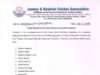
The decision comes after the resignation of the Chief Executive Councillor (CEC), three Executive Councillors and six other councillors of the erstwhile council on October 20, 2026. The administration has also taken into consideration the restructuring of the territorial boundaries of the former Kargil district following the creation of Drass, Zanskar and Sankoo as new districts.
Under the order, the CEC, Executive Councillors and all elected or nominated members of the erstwhile LAHDC Kargil shall cease to hold office and exercise powers as members of the council with immediate effect.
To prevent an administrative vacuum and ensure that governance and public services continue without disruption, the administration has vested all powers, duties and functions previously exercised by the erstwhile council in the Deputy Commissioner/Chief Executive Officer, Kargil, until further institutional arrangements are put in place.
The interim arrangement is intended to maintain administrative stability during the transition and ensure that essential public services and development-related functions continue to be discharged.
The order stipulates that the arrangement will remain in force until separate Autonomous Hill Development Councils are fully constituted in accordance with the provisions of the Ladakh Autonomous Hill Development Councils Act, 1997, and the rules framed thereunder, as amended from time to time.
The dissolution comes amid a broader restructuring of the administrative framework in the Kargil region following the creation of new districts. The altered territorial boundaries and resignations of key council members have necessitated an interim mechanism to manage the functions previously exercised by the erstwhile council.
The transition places responsibility for the council’s functions under the district administration while the process of constituting separate councils proceeds in accordance with the applicable legal framework.
The Ladakh Administration has reiterated its commitment to effective governance, administrative continuity and the strengthening of grassroots institutions. The immediate priority under the new arrangement will be to ensure that the transition does not disrupt public services or the discharge of essential administrative responsibilities across the region.