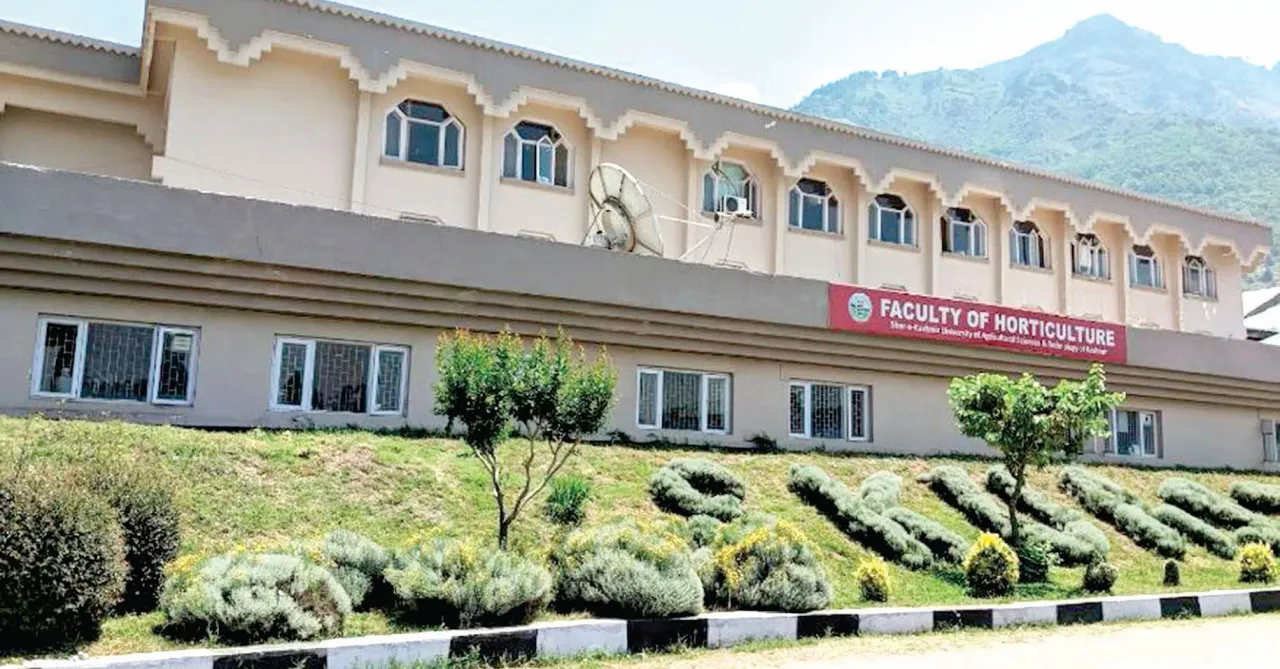

A study conducted at the Division of Fruit Sciences, Sher-e-Kashmir University of Agricultural Sciences and Technology of Kashmir (SKUAST-K), Shalimar, has confirmed that Sahebi is a functionally female grape cultivar, providing a scientific explanation for the frequent occurrence of the “Hen and Chicken” disorder in the variety.
The disorder is characterised by bunches carrying a mix of normal-sized berries and numerous small, underdeveloped berries, resulting in reduced marketable yield and quality. Around 70–80 percent of Sahebi grapes are reported to be affected by the disorder in Kashmir.
Grape cultivation has considerable potential in the region, with Ganderbal accounting for around 206 hectares under grapes and producing about 1,385 metric tonnes. Sahebi constitutes 54.42 percent of the district’s grape cultivation, followed by Hussaini at 35.20 percent.
During the 2025–26 research season, floral morphology and pollen characteristics of nine grape cultivars were studied under Kashmir’s temperate conditions. The research was undertaken by Raksha under the mentorship of Dr Aroosa Khalil and Dr A.H. Pandit, Head, Division of Fruit Breeding, Technology and Innovation.
The study found that Sahebi has reflexed stamens and non-functional pollen, confirming its functional female nature and dependence on pollen from a compatible cultivar for effective fertilisation and fruit set.
The findings indicate that inadequate pollination in vineyards without a suitable pollinizer may contribute to poor berry development and uneven bunches. The researchers have recommended planting compatible pollen-producing cultivars such as Hussaini, Thompson Seedless, Fantasy Seedless, Pusa Navrang and Manjari Naveen alongside Sahebi while establishing new vineyards.
Timely pruning, balanced nutrient management and other appropriate vineyard practices can further support fruit development and bunch uniformity. The study provides a practical basis for improving pollination management in Sahebi vineyards and reducing losses associated with the “Hen and Chicken” disorder.