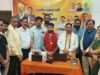

 JAMMU, OCT 1: BJP spokesperson and former Deputy Mayor Adv. Purnima Sharma on Thursday questioned the legislative and policy attention accorded to women’s issues during the recently concluded Autumn Session of the Jammu and Kashmir Legislative Assembly, demanding a clear and time-bound roadmap on employment, women’s health, social security and the working conditions of frontline women workers.
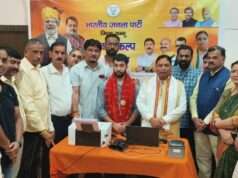
Addressing a press conference at the BJP headquarters in Trikuta Nagar, Jammu, Sharma said the conclusion of the Assembly session had left a larger question of legislative accountability, particularly with regard to issues affecting women across Jammu and Kashmir. She was flanked by J&K BJP Media In-charge Dr. Pardeep Mahotra and BJP Mahila Morcha General Secretary Urvashi Gupta.
Sharma linked her criticism to the limited legislative business conducted during the session, pointing out that the Assembly had seven sittings with around 25 hours of business, while 646 questions were received and 31 were taken up on the floor, according to the figures cited by her. She argued that the limited time available to legislators inevitably affected the extent to which public concerns could receive detailed scrutiny and government responses.
“We are not talking about speeches, assurances or issues merely appearing in the Assembly calendar. We are talking about decisions, legislation, budgetary commitments, timelines and implementation,” Sharma said.
Sharma sought clarity on the government’s policy framework for women seeking employment and attempting to sustain careers while managing family responsibilities. She raised questions concerning employment opportunities, workplace security, childcare, maternity support, equal opportunities and social protection, arguing that these issues require institutional mechanisms rather than periodic assurances.
“Women today are not asking governments to speak on their behalf. They are asking governments to create conditions in which they can work, earn and live with dignity,” she said.
She particularly highlighted the position of Anganwadi workers and helpers, describing them as a critical grassroots workforce involved in childcare, nutrition and community welfare. Sharma questioned the government over remuneration, working conditions and pending employment-related concerns affecting these workers.
“Why are the women who serve our children and communities still waiting? When will their honorarium be enhanced? When will their pending welfare concerns be resolved? Most importantly, what is the government’s timeline?” she asked.
The BJP leader also raised the concerns of ASHA workers and other frontline women workers, saying that women performing essential community-level responsibilities require adequate institutional support, welfare measures and social security.
She argued that the contribution of these workers should be reflected in concrete policy measures and not remain confined to recognition of their role.
Sharma also referred to discussion surrounding a private member’s Bill relating to women’s health, adolescent girls, maternal and child health, education and social support, stressing that the presence of a proposal on the Assembly agenda should not itself be treated as evidence of implementation.
“A Bill on paper is not women’s empowerment. Women need implementation, not symbolism. They need a properly funded framework, clear timelines and measurable action,” she said.
Sharma called for a comprehensive government roadmap covering working women, Anganwadi workers, ASHA workers, women’s health and nutrition, girls’ education, childcare, maternity support and social security.
She said the government’s approach to women’s welfare should be assessed through concrete policy decisions, financial commitments and measurable implementation rather than declarations alone.
“You cannot talk about development while thousands of women workers remain uncertain about remuneration, security and benefits. You cannot talk about empowerment while working women continue to wait for stronger institutional support,” Sharma said.
Framing the issue as one of accountability, she demanded that the government specify what measures are proposed, what financial provisions will support them, and within what timeframe they will be implemented.
“This is not a demand for favour. This is a demand for accountability,” Sharma said.
She maintained that the end of the Autumn Session should not bring an end to scrutiny of women-centric issues, urging the government to take the concerns raised during and around the session into its policy and administrative agenda.
“The Autumn Session is over, but the questions of the women of Jammu and Kashmir remain on the table. The government must answer them—not with another promise, but with policy, budget, timelines and action. Half the population cannot be treated as half a priority,” Sharma asserted.